
Track 8
Track 8. Emerging Devices, Photonics & Beyond-CMOS Integration
Chair: Hiroshi Sakurai, Gunma University, Japan
Co-Chair: Akito Chiba, Gunma University, Japan
Co-Chair: Kosuke Suzuki, Gunma University, Japan
This track focuses on emerging devices, photonics, and
beyond-CMOS integration as key enablers for future computing and
communication systems. It explores novel device technologies such as
memristors, spintronics, 2D materials, and quantum devices, as well as
photonic components for high-speed data transmission and on-chip optical
computing. The track also addresses heterogeneous integration, advanced
packaging, and co-design methodologies that combine electronic, photonic,
and novel device platforms. By transcending traditional CMOS scaling limits,
these technologies aim to deliver higher performance, lower power
consumption, and new functionalities. Contributions are welcomed on device
physics, circuit and system design, fabrication, and application-driven
demonstrations that advance the development of next-generation integrated
systems beyond conventional CMOS.
Submission Link:
https://easychair.org/conferences/?conf=icccas2027
**Log in and choose "Track 8"
Track Chair Introduction
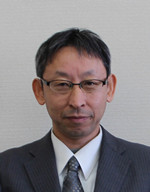 Hiroshi Sakurai, Gunma University, Japan
Biography: Hiroshi Sakurai is currently a full professor and doctoral advisor at the Graduate School of Science and Technology and the Interfaculty Initiative for Regulatory Sciences in Biomedical Science and Engineering at Gunma University. He heads the X-ray Physics Laboratory. He served as chair of the Compton Scattering Research User Group at SPring-8, Japan. He received his Ph.D. in 1993 from Gunma University, Japan, in Electronics and Information Engineering. His research interests include the solid-state physics of spintronics and energy device materials. He has published over 150 articles in leading international journals and at conferences, including Nature, APL, PRL, and PRB. He has led several projects funded by JSPS KAKENHI and F-REI Japan.
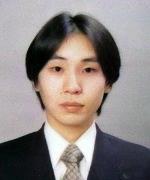 Akito Chiba, Gunma University, Japan
Biography: Akito
Chiba received his B.E. degree in electric and precision engineering, and
his M.E. and Ph.D. degrees in the field of electronics and information
engineering from Hokkaido University, Sapporo, Japan, in 2000, 2002, and
2005, respectively. From 2005-2010, he worked with the Lightwave Devices
Project of the New-Generation Network Research Center, National Institute of
Information and Communications Technology (NICT), Koganei, Tokyo, Japan,
where he engaged with Lithium Niobate electrooptic devices and their
applications to optical communication. From 2010-2011, he joined the Faculty
of Engineering, Shizuoka University, Hamamatsu, Shizuoka, Japan, where he
served as a Postdoctoral Fellow for CREST Project of Japan Science and
Technology Agency, and he was involved in the development of a
cathodoluminescent thin film for electron-beam-assisted high-resolution
optical imaging. From 2011 he has been with Gunma University, Kiryu, Gunma,
Japan, and now he serves as an associate professor in the Division of
Electronics and Informatics, Faculty of Science and Technology of the
University. In 2018 he was also a visiting scholar at the Department of
Electrical and Computer Engineering, Henry Samueli School of Engineering and
Applied Science, University of California, Los Angeles. His current research
interests include the field of applied optics, fiber optics, and RF
photonics, utilizing modulation and demodulations for optical communication,
measurement, and RF signal processing. Dr. Chiba is a member of Optica
(formerly the Optical Society (OSA)), IEEE Photonics Society (IEEE-PS), the
Japan Society of Applied Physics (JSAP), the optical society of Japan (OSJ),
and the Institute of Electronics, Information, and Communication Engineering
of Japan (IEICE).
Biography:
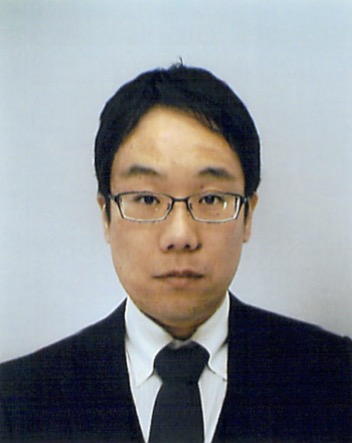 Kosuke Suzuki, Gunma University, Japan