Track 4
Track 4. Millimeter-Wave and Terahertz Communication
Chair: Yaxin Zhang, University of Electronic Science and Technology of China, China
Co-Chair: Hao Gao, Southeast University, China
Co-Chair: Chao Tang, Tohoku University, Japan
Co-Chair: Weijie Gao, The University of Osaka, Japan
This track focuses on millimeter-wave and terahertz
communication technologies as key enablers for next-generation wireless
systems. It addresses fundamental theories, channel modeling, device and
circuit design, as well as advanced transmission and networking techniques
operating in high-frequency bands. By exploiting the abundant spectrum
resources of millimeter-wave and terahertz frequencies, these technologies
promise ultra-high data rates, low latency, and massive connectivity. The
track also explores challenges such as severe path loss, hardware
constraints, beam management, and atmospheric absorption, along with
emerging solutions including intelligent beamforming, reconfigurable
intelligent surfaces, and integrated sensing and communication.
Contributions are welcomed on both theoretical advances and practical
implementations supporting future 6G networks and beyond.
Submission Link:
https://easychair.org/conferences/?conf=icccas2027
**Log in and choose "Track 4"
Track Chair Introduction
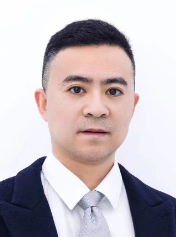 Yaxin Zhang, University of Electronic Science and Technology of China, China
Biography:
Yaxin Zhang is a Professor and Ph.D. Supervisor, and a recipient of the
National Talent Program and the Ministry of Education’s New Century
Excellent Talents Program. He has also been selected for the Sichuan
Provincial Leading Talent Program and recognized as an Academic and
Technical Leader of Sichuan Province.
He serves as Deputy Director of the Youth Working Committee of the Chinese
Society for Optical Engineering, and holds key roles in the Chinese
Institute of Electronics and the China Institute of Communications. He is
also an Associate Editor of Info-science.
His research focuses on terahertz RF chips and communication systems. He
proposed the terahertz meta-chip concept and has developed high-performance
devices and systems with data rates exceeding 100 Gbps.
 Hao Gao, Southeast University, China
Biography:
Prof. Hao Gao is a Chair Professor at Southeast University and a nationally
recognized overseas high-level talent. His research focuses on integrated
circuit design for communication microsystems, millimeter-wave and terahertz
communications, and optoelectronic integration for next-generation
communication and sensing systems.
He has received prestigious awards including the ISSCC Best Technical Paper
Award and has published over 180 papers in top venues such as ISSCC, VLSI,
and JSSC. He serves on technical committees for leading IEEE conferences
including ISSCC, A-SSCC, and RFIC.
Prof. Gao holds dual PhDs from Eindhoven University of Technology and has
extensive academic and industry experience. His team has developed advanced
5G millimeter-wave RF and phased-array chips with large-scale deployment,
earning international recognition including the EU Microelectronics
Innovation Award.
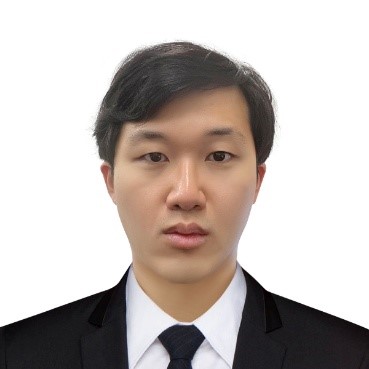 Chao Tang, Tohoku University, Japan
Biography: Dr. Chao
Tang is a Prominent Research Fellow and Assistant Professor at the Frontier
Research Institute for Interdisciplinary Sciences (FRIS), Tohoku University,
with a concurrent position at the Research Institute of Electrical
Communication (RIEC). He has extensive experience in terahertz (THz)
technology, low dimensional materials, and semiconductor device fabrication,
with over 30 peer-reviewed publications and more than 50 conference
presentations worldwide. Dr. Tang specializes in crystal growth, thin-film
deposition, and nanofabrication techniques, particularly for THz
applications. His research has led to significant advancements in THz light
sources, detectors, and spectroscopy systems, with a strong focus on the
development of low-power, high-speed THz detection technologies. He has
played a key role in multiple national and international research projects,
leading initiatives funded by JSPS, JST, NEDO, and industry collaborations
with ROHM Co., Ltd., with a cumulative research budget exceeding 100 million
JPY. Beyond his research, Dr. Tang is actively involved in international
scientific collaborations and conference organizations, including JSAP
meeting, TeraTech2021 and TeraTech2023. He has also contributed to academia
as a lecturer in solid-state physics, semiconductor experiments, and
mathematical physics. Dr. Tang holds a Ph.D. and M.S. in Materials Science
from Tohoku University and a B.S. in Material Physics from Nanjing
University. His work continues to push the frontiers of THz technology,
aiming for breakthroughs in next-generation wireless communication,
non-destructive testing, and biomedical sensing applications.
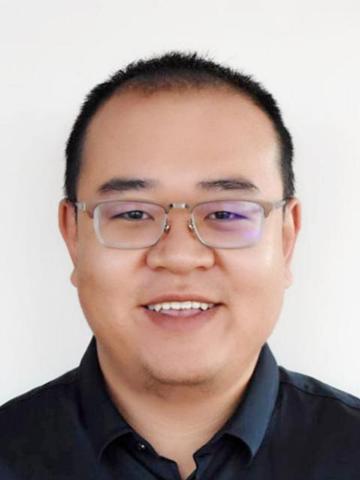 Weijie Gao, The University of Osaka, Japan
Biography:
Weijie Gao received the PhD degree in Electrical and Electronic Engineering
from The University of Adelaide, Adelaide, SA, Australia, in 2022. Since
then, he has joined The University of Osaka, Japan, as a Specially Appointed
Researcher, supported by the Beyond 5G R&D Promotion Program from the
National Institute of Information and Communications Technology (NICT),
Japan and the Core Research for Evolutional Science and Technology (CREST)
program of the Japan Science and Technology Agency (JST). His research
focuses on terahertz silicon photonics and communications for beyond-5G
applications, including terahertz waveguides, antennas, passive and active
components, electronic–photonic integration, and both wireless and on-chip
terahertz communications systems.
Dr. Gao received the Young Researcher Award from The University of Osaka in
2023 in recognition of his contributions to the fundamental research in
terahertz communications. He was the recipient of 2025 IEEE Antennas and
Propagation Society Fellowship and the Student Prize at 2021 Asia-Pacific
Microwave Conference (APMC). He received the University Doctoral Research
Medal, the Gertrude Rohan Memorial Prize, and Dean's Commendation for
Doctoral Thesis Excellence for his doctoral thesis.