Track 2
Track 2. AI-Driven Communications & Semantic Networking
Chair: Kai Niu, Beijing University of Posts and Telecommunications, China
Co-Chair: Jincheng Dai, Beijing University of Posts and Telecommunications, China
Co-Chair: Shuo Shao, University of Shanghai for Science and Technology, China
This track focuses on the integration of artificial intelligence with
communication systems and semantic networking. It explores how AI-enabled
perception, semantic understanding, and intelligent decision-making can
transform traditional communication architectures. By leveraging semantic
encoding, knowledge-aware transmission, and adaptive network control,
AI-driven communications aim to significantly improve spectral efficiency,
reliability, and energy efficiency. Semantic networking further enables
meaning-oriented information exchange, reducing redundant data transmission
while enhancing service quality. This track welcomes contributions on
theoretical foundations, system design, and practical applications,
supporting intelligent connectivity for next-generation networks and
emerging intelligent services.
Submission Link:
https://easychair.org/conferences/?conf=icccas2027
**Log in and choose "Track 2"
Track Chair Introduction
 Kai Niu, Beijing University of Posts and Telecommunications, China
Biography: Niu Kai
received the B.S. degree in information engineering and the Ph.D. degree in
signal and information processing from Beijing University of Posts and
Telecommunications (BUPT), Beijing, China, in 1998 and 2003, respectively.
He is currently a Professor with the School of Artificial Intelligence,
BUPT. His research interests include channel coding theory and applications,
semantic communication and broadband wireless communication. He has
published more than 200 academic papers, and his proposed high performance
compilation code algorithm for polar code has become the mainstream scheme
of 5G standard, and won the first prize of Natural Science of Science and
Technology Award of the Chinese Institute of Electronics.
 Jincheng Dai, Beijing University of Posts and Telecommunications, China
Biography: Jincheng
Dai (Member, IEEE) received the B.S. and Ph.D. degrees from the Beijing
University of Posts and Telecommunications (BUPT), Beijing, China. He is
currently an Associate Professor with the School of Artificial Intelligence
and the Key Laboratory of Universal Wireless Communications, Ministry of
Education, BUPT. His research interests include AI for coding and
communications. He has been selected for the Beijing Nova Program, the China
Association for Science and Technology’s (CAST) Young Elite Scientists
Sponsorship Program, and the Xiaomi Young Scholars Program. As a core
contributor, he has received the First-Class Natural Science Award of the
Chinese Institute of Electronics. He has received several accolades, such as
the Excellent Science and Technology Paper Award from CAST.
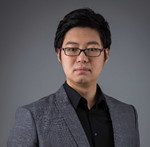 Shuo Shao, University of Shanghai for Science and Technology, China
Biography: Shuo
Shao received the B.A. degree from Southeast University, China, in 2011; the
M.A.Sc degree from McMaster University, Canada, in 2013; and the Ph.D.
degree from Texas A&M University, U.S., in 2017. He joined Shanghai Jiao
Tong University, China, in 2017 as an Assistant Professor and was promoted
to Associate Professor in 2021. He is currently with University of Shanghai
for Science and Technology as an Associate Professor. He is a recipient of
the Shanghai Young Talent Sailing Project and the best paper award of IEEE
WCSP 2022 and IEEE/CIC ICCC 2025. His research interests include network
information theory and intelligent communications.